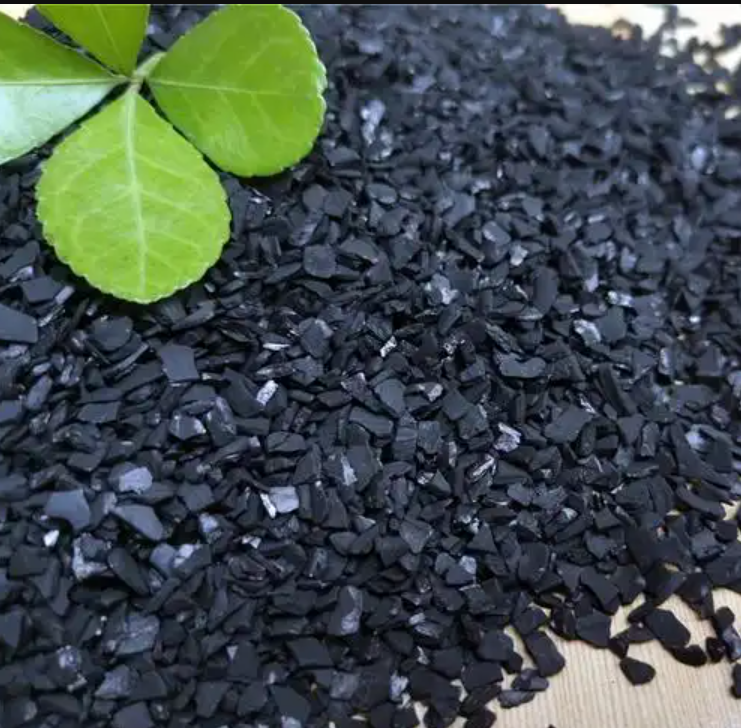
Coconut oil, with its natural aroma, unique nutritional value, and wide applicability in the food and cosmetics industries, enjoys continuously rising global demand. However, virgin coconut oil often contains natural pigments (carotenoids, polyphenols, etc.), oxidation products, trace metal ions, and off-flavor substances, which not only affect the oil's color and transparency but also reduce product stability and sensory quality. Decolorization and refining are key steps in coconut oil processing, and Activated carbon, due to its excellent adsorption properties, has become a core material in this process, playing a crucial role throughout the entire process from impurity removal to quality enhancement.
I. Core Application Value of Activated carbon in Coconut Oil Refining
Activated carbon primarily undertakes three core tasks in coconut oil refining: decolorization, deodorization, and impurity removal. Its porous structure acts like a "miniature adsorption sponge," precisely capturing various harmful impurities and undesirable substances in the oil: First, it adsorbs natural pigments such as carotenoids and chlorophyll, changing the oil from pale yellow or dark brown to a clear golden yellow, improving the product's appearance; second, it removes volatile odor substances and trace odor components produced by oxidation, preserving the natural aroma of coconut oil; third, it efficiently retains pollutants such as polycyclic aromatic hydrocarbons (PAHs) and trace heavy metal ions, with a significant removal rate for highly carcinogenic PAHs such as benzo(a)pyrene, ensuring food safety. In addition, activated carbon can also adsorb some colloidal and phospholipid impurities, helping to improve the oxidative stability of coconut oil and extend its shelf life.
II. How to Choose Activated Carbon for Coconut Oil Refining The core of selecting activated carbon is matching the characteristics of coconut oil impurities with refining requirements. It is necessary to comprehensively consider the type of raw material, activation method, adsorption performance indicators, and safety requirements, avoiding a sole reliance on iodine value, and achieving a balance between effectiveness and cost.
(I) Raw Material Selection
Coconut shell activated carbon is the preferred choice for coconut oil refining. Its well-developed pore structure and high micropore ratio provide excellent adsorption capacity for small-molecule pigments and PAHs in the oil. It also boasts low ash content and high purity, avoiding secondary contamination. Wood-based Activated carbon is the next best choice, with uniform pores and good adsorption of medium-molecular-weight pigments, making it suitable for cost-sensitive applications with moderate impurity content in the raw materials. Coal-based activated carbon, due to its high impurity content and safety concerns that make it unsuitable for food-grade applications, is only used for pretreatment of coarsely processed coconut oil and is rarely used in food-grade coconut oil refining.
(II) Activation Method Selection
Physically activated (steam-activated) activated carbon has a regular pore structure and strong adsorption selectivity, removing impurities while minimizing the impact on the nutritional components of coconut oil, making it the mainstream choice for food-grade refining. Chemically activated carbon has abundant surface functional groups, resulting in better adsorption of pigments containing specific functional groups. However, strict control of residual chemical reagents is necessary, limiting its use only in special conditions with complex impurity compositions.
(III) Key Performance Indicator Control
- Iodine Value: Reflects microporous adsorption capacity. For coconut oil refining, activated carbon with an iodine value of 1000-1050 mg/g should be selected to ensure efficient removal of small molecule pigments and PAHs.
- Methylene Blue Adsorption Value: Corresponds to medium molecular adsorption capacity. It is recommended to control it at 150-220 mg/g to specifically remove some colloidal impurities and odor substances in the oil.
- Purity Indicators: Ash content must be ≤4% (acid washing grade ≤2%), heavy metal (lead, mercury, cadmium, etc.) content must meet food-grade standards, and moisture content ≤8% to avoid oil contamination.
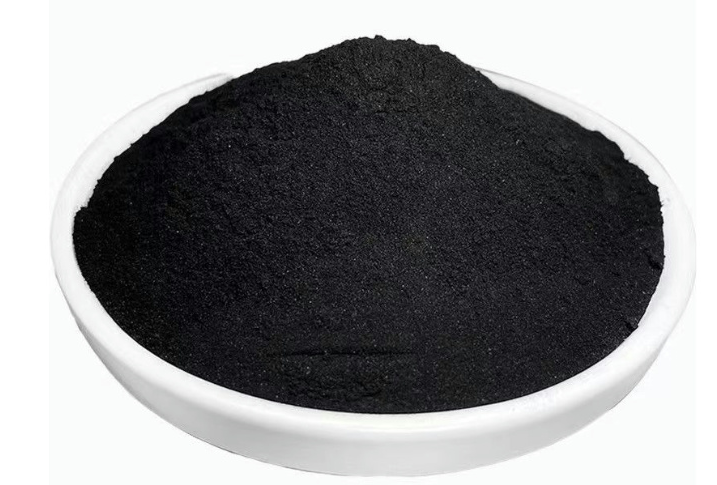
- Particle Size: 200-325 mesh powdered activated carbon should be selected. Overly coarse particles will reduce adsorption efficiency, while overly fine particles will increase the difficulty of subsequent separation. The proportion of fine powder below 5 micrometers should be controlled to reduce the risk of equipment clogging.
(IV) Cost-Effectiveness Considerations
Although the unit price of coconut shell activated carbon is higher than that of wood-based activated carbon, its adsorption efficiency is higher and the dosage is lower (usually 0.1%-1% of the oil weight; the dosage can be increased appropriately for inferior crude oil), resulting in a lower overall cost.
III. Separation Process of Activated Carbon and Coconut Oil
The core of separation is to completely retain activated carbon powder and adsorbed impurities while minimizing oil loss. The mainstream process is filtration, combined with process optimization to improve separation efficiency.
(I) Mainstream Separation Method: Plate and Frame Filtration
This is the most mature separation technology in edible oil refining, with a simple operation process and stable filtration effect. The decolorized oil (temperature maintained at 75-80℃ to ensure fluidity) is pumped into a plate and frame press. Under pressure, it passes through a filter cloth, where activated carbon and solid impurities are retained. The filtrate is the decolorized, clear coconut oil. After filtration, the plate and frame are disassembled to clean the filter residue, and the filter cloth can be washed and reused. This method effectively removes fine particles, resulting in high oil transparency after separation, making it suitable for large-scale industrial production.
(II) Key Points of Process Optimization
To improve separation efficiency, a "carbon-in-pulp premixing" process can be adopted: activated carbon and water are mixed at a ratio of 1:5 to form a uniform carbon slurry before being added to the oil. This avoids dust diffusion and uneven feeding, while also reducing filter cloth clogging. For activated carbon and bleaching clay composite decolorization, the mixing ratio of the two should be controlled (usually 1:4-1:5), and a low-shear mixer should be used for mixing to prevent the activated carbon particles from breaking down and producing fine powder, which would increase the difficulty of separation.
(III) Auxiliary Separation Technologies
For small-scale production, vacuum filtration can be used, utilizing negative pressure to accelerate the permeation of oil through the filter medium. This is suitable for scenarios with small batch sizes and low impurity content. Some high-end refining lines use membrane filtration technology, which can achieve more precise particle retention, but the equipment investment is higher, and the membrane modules need to be cleaned regularly to maintain flux.
IV. Treatment and Resource Utilization of Waste Activated Carbon
The separated waste activated carbon (saturated carbon) adsorbs a large amount of pigments, impurities, and some oil, falling under the category of hazardous waste. It must be treated according to the principles of "reduction, harmlessness, and resource utilization," and indiscriminate disposal is strictly prohibited.
(I) Regeneration and Recycling
This is the most economical treatment method. Through thermal regeneration (heating at 800-900℃ to decompose and volatilize the adsorbed organic impurities) or chemical regeneration (acid washing and alkali washing to remove adsorbates), the pore structure and adsorption performance of the activated carbon are restored. The regenerated activated carbon can retain 70%-80% of its original adsorption efficiency and can be used for low-standard coconut oil refining or other industrial wastewater treatment, reducing production costs. Professional activated carbon manufacturers usually provide regeneration services, forming a closed loop of "use-regeneration-reuse."
(II) Harmless Disposal
Non-renewable waste activated carbon must be disposed of by a qualified hazardous waste treatment unit through two methods: First, high-temperature incineration, where it is completely burned in a dedicated incinerator, and the incineration residue can be used as a building material auxiliary material; second, safe landfill, which must be carried out in a standard hazardous waste landfill to prevent the leakage of adsorbed harmful substances and pollution of soil and water bodies. Before disposal, oil recovery from the waste activated carbon is necessary to reduce pollutant emissions and energy consumption during incineration.